
How to clean your golf balls, shoes and gloves
13 January 2026
Let’s be honest—we could probably all do with learning how to clean our golf balls and other golf equipment better to make them last longer.
If that sounds like you, you’re in the right place. Golf equipment can be expensive, so it pays to look after it.
How do you clean golf balls?
While most of us leave our balls in the bottom pocket of our golf bags until we let one slip out of bounds, there’s a better way forward, both for the longevity of the ball and its dazzling appearance.
- The most tried-and-tested method is to get a bucket of warm water and mix some soap into it. A wipe with a damp cloth should remove any excess dirt. If you want to try a bit harder, a toothbrush or soft-bristled brush should do the job. One final rinse should have them looking close to new again.
- If that hasn’t worked, soak your golf balls in a bucket of water and add some white vinegar, hydrogen peroxide, bleach or OxiClean (a mix of hydrogen peroxide and washing soda). Soak the balls for up to half an hour, but no longer, to avoid them becoming waterlogged. Again, a cloth or a soft-bristled brush should remove any remaining dirt. This method is considered one step up from the more traditional soap and water combination.
- You don’t have to search very far before finding a photo of a load of golf balls in a dishwasher. But does it actually work? It has been tested many times, and it appears that the placement of the balls in your dishwasher doesn't matter—the results are great. It should be noted that if you have a ‘Heated Dry’ cycle, it’s advisable to turn this off, as lengthy heat exposure and golf balls aren’t a good mix. This seems a particularly easy way to get old golf balls looking like new again.
- If you’re looking to remove your permanent marker lines, rubbing alcohol, acetone, or nail polish remover is your best bet. Rubbing alcohol is the gentlest of these solutions, while acetone is the harshest. If applying the latter, use gloves and take care when handling it.
What not to do when cleaning your golf balls
When cleaning your golf balls, don’t…
- Soak the balls for too long
- Leave them in the sun for too long, as this could change the internal compression, which will impact how the ball reacts off the clubface
- Use undiluted bleach, as this might have an unwanted effect on the ball’s outer layer
- Use a sharp metal brush or too stiff a bristled brush, as you might scratch the surface of the ball or damage the outer layer, both of which will impact the performance of the ball
How to clean golf shoes
Proper golf shoes are a significant investment, and with some straightforward care, you can easily prolong their lifespan, feel and performance.
FootJoy is the No. 1 golf shoe brand and offers valuable tips and advice on caring for your golf shoes. Some of the following will be alarmingly familiar…
- FootJoy suggest rotating your golf shoes, as two pairs of shoes will last more than twice the length of time one pair will
- Use a shoe horn when putting on your shoes to protect the heel. Damage to the heel can cause a poor fit and often leads to blistering
- FootJoy strongly recommend leaving a shoe tree in your shoes when you’re not playing
- Don’t over-tighten your cleats, and check on them after each round
- Don’t store your golf shoes in the boot of your car, as high temperatures will break down the materials over time
What to do with your golf shoes after a round
Always remove any dirt from your shoes straight after a round. Make the most of the air dryer if possible, and remove any residue, which will make the post-round clean much easier. Wet wipes are also a great way to give your golf shoes a thorough clean. A soft brush and warm water with soap/Fairy Liquid will also reach the tricky spots.
Tip: For optimal cleaning, remove the laces and inner soles to give your shoes the best chance of looking and performing at their best. When drying, place them in an airing cupboard or a well-ventilated area indoors, rather than in direct sunlight. Never use a hairdryer, as excessive heat can damage the uppers and outsoles.
Given that we live in the UK, we often play golf in the rain, so we must take care of our shoes. After cleaning, place a newspaper inside the shoes for approximately 8-10 hours to absorb excess water. Then, use the shoe tree to help the shoes return to their standard shape.
FootJoy offers a Wax Shoe Polish perfect for looking after high-quality leather and giving your shoes a lasting shine. However, remember that this is a polish, not a cleaning product, so ensure your shoes are as clean as possible before applying it.
How to clean golf gloves
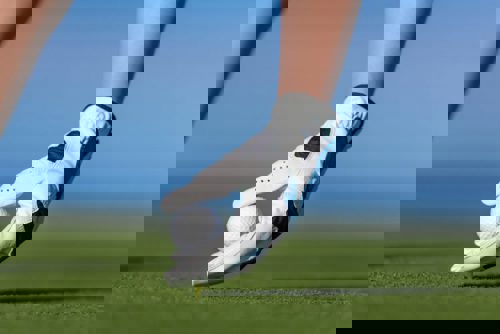
Like with your shoes, it’s a good idea to have a few pairs of golf gloves on rotation to extend the lifespan of each of them.
If you’re hitting balls on the range, there’s not necessarily any need to use one of your finest Cabretta leather offerings for this. Instead, it’s worth considering a synthetic glove for practice, as they’re more resistant to repeated use, and leather gloves certainly lose their effectiveness when used in high temperatures and sweating.
Air your golf gloves out as often as possible. Some golf bags even have a Velcro tab to let you attach your glove, which certainly helps you get the most out of them.
While Tour pros may change gloves every round or so, a decent glove should last you for 15-20 rounds at least. You can achieve this by not stuffing it in the bottom of your bag with the rest of your gear. There’s a chance that it might get punctured on the tees, and when folded up, your gloves will lose their shape and become crusty.
Remember how it felt when you first put that leather glove on? Well, put it back in your bag the same way that it came out. Stretch it back to its original shape and place it flat away from your other bits or, ideally, in the packet it came in.
And when it gets wet, that doesn’t necessarily spell the end of its lifespan. However, never use a hairdryer or put it on a radiator—instead, use your airing cupboard or just let it dry out naturally to help it back to its original shape.
Most leather gloves are not machine washable, either, so only gently hand-wash your favourite leather gloves with a mild detergent, and always air-dry afterwards.
Specialist golf insurance through Golf Care
In addition to ensuring your golf equipment is kept in top condition, you may also want to consider protecting it with specialist golf insurance.
Through Golf Care, policies include Equipment Cover up to £7,500 and Public Liability up to £10m, so you can play golf with peace of mind. Get an online quote today.
Please note the information provided on this page should not be taken as advice and has been written as a matter of opinion. For more on insurance cover and policy wording, see our homepage.


